Afghan : The Ruler of Kashmir

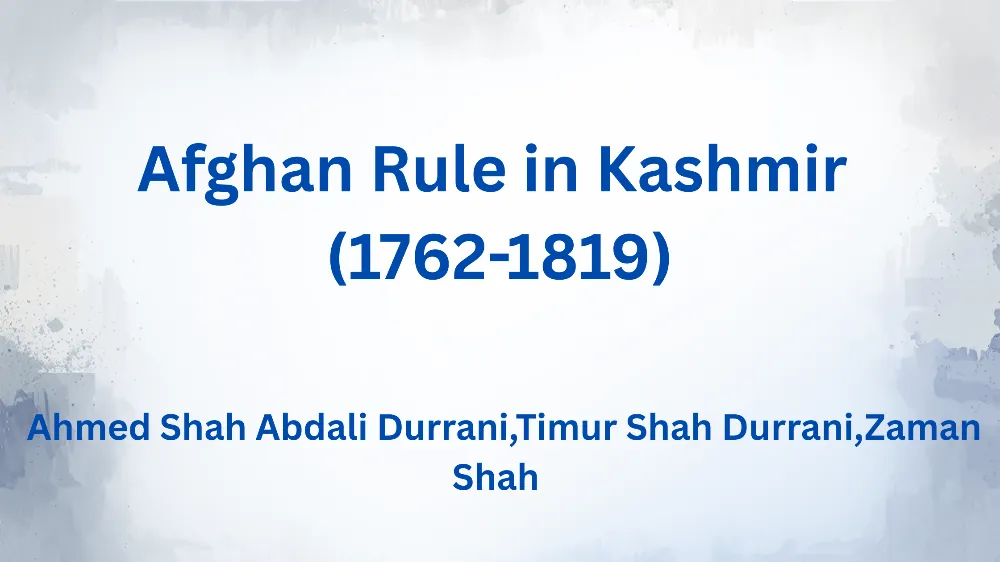
Afghan Rule in Kashmir (1762- 1819)
Introduction
The Durrani Empire established its rule over Kashmir in 1752 when Ahmad Shah Durrani conquered the region. The Afghan rule in Kashmir lasted until 1819. During this period, the region was governed by Afghan governors who were appointed by the rulers of the Durrani Empire. The Afghan administration was known for heavy taxation and strict control, which caused hardships for the local people. In 1819, the Afghan rule came to an end when the forces of the Sikh Empire led by Maharaja Ranjit Singh defeated the Afghan governors and took control of Kashmir.
This is a Afghan Ruler in Kashmir
- Ahmed Shah Abdali (Durrani Empire ) ( 1762-1772)
- Timur Shah Durrani (1772 - 93 )
- Zaman Shah (1793-1801)
- Mahmud Shah (1801- 1803)
- Shuja Shah
- Mahmud Shan (1809- 1819)
- Sultan Ali Shah (1818 - 1819)
- Ayab Shah (1819)
1. Ahmed Shah Abdali Durrani (1762-1772)
- Shawl export declined
- Cruelty towards Kashmir
- First Afghan Governer took of Kashmir
- Abdullah Khan isk Aquasi
- Nur-ud-din
- Went to kabul and gave control to 'Buland Khan'
- Appoitned Pandit Kailash Dhar as renenue collector and Mir Muqim Kant as Diwan
2. Timur Shah Durrani (1772-93)
- Shifted the capital to Kabul and made Peshaswar as winter capital
- Amir Khan ( Governor) made Amirao Kadal also called Dilerjung
- Next Govener Karim Dad Khan in 1779 Ranjit Singh attacked but forces were crused
3. Zaman Shah (1793-1801)
- Governor Al-Kabul
- Son of Timur
4. Mahmud Shah (1801-1803)
- Younger brother of Zaman Shah
5. Shuja Shah
- In 1809 Signed a treaty with British ( first treaty)
6. Mahmud Shah (1809-1819)
- Second regin
7. Sultan Ali Shah (1818-1819)
8. Ayub Shah (1819)
- Afghan last control of Kashmir to Sikh empire in the Battle of Shopian
- Ranjit Singh was held by Fateh Mohmmed Khan (rule of Afghanistan )
- Last Afghan Governer
- Jabbar Khan only for 4 months
Conclusion
The relationship between Afghanistan and the Kashmir conflict has evolved from historical conquest (18th-century Afghan rule) to contemporary strategic shifts, where the Taliban-led government has surprisingly endorsed India's sovereignty over Jammu and Kashmir.