Rohit Sharma's ODI Career: From Belfast Debut to Lord's Glory
India's star opener Rohit Sharma might play his last ODI match at Lord's Cricket Ground on Sunday. Indian cricket fans are set for an emotional farewell this Sunday as Lord's Cricket Ground might witness Rohit Sharma's last ODI match.
India will lock horns with England in the third and final ODI, and speculation is rife that he might retire from the 50-over format after this match.
There is no official confirmation from either Rohit or the BCCI, but the possibility has made this upcoming match emotional for Indian cricket fans.
If the Lord's match is indeed his last game in this format, everything will come full circle for Rohit, whose ODI career began in Belfast in 2007. Over the years, the stylish right-handed batter has gone from a middle-order role to becoming one of the best openers in this format.
A look at Rohit Sharma's ODI numbers
Before looking at the achievements that defined his illustrious career, consider the full picture, which shows why he is one of the best white-ball batters of the current generation.
Where and when did Rohit Sharma's ODI journey begin?
Rohit made his ODI debut on 23rd June against Ireland in Belfast, which was part of the Future Cup.
In his debut ODI, he was included in the playing XI as a middle-order batter, but he did not bat that day as the Men in Blue chased the target comfortably, winning by nine wickets with four overs remaining.
How did Rohit Sharma fare in his milestone ODI appearances?
He played his 50th ODI match against Sri Lanka on 24th February, 2012, at Hobart, as part of the Commonwealth Bank series, where he scored just five runs off 13 balls before being dismissed.
More than a year later, he played his 100th ODI against Zimbabwe on 26th July 2013. Batting at No.4, he scored 13 runs off 18 balls as India chased 145 and won by seven wickets.
Soon after this match, the team management decided to use him as an opener permanently, which completely changed his career.
He played his 150th ODI match against New Zealand in New Delhi on 20 October, 2016. He had become the 19th Indian batter to open the innings, and he scored 15 runs off 27 balls before Mitchell Santner dismissed him. India lost by six runs, and the visitors leveled the series.
He featured in his 200th ODI match on 31 January, 2019, against the Black Caps at Hamilton. Leading the team in Virat Kohli's absence, he scored seven runs off 23 balls before Trent Boult dismissed him. India lost by eight wickets.
But he had a dream run in his 250th ODI match, the Asia Cup summit clash against Sri Lanka in Colombo on 17th September, 2023.
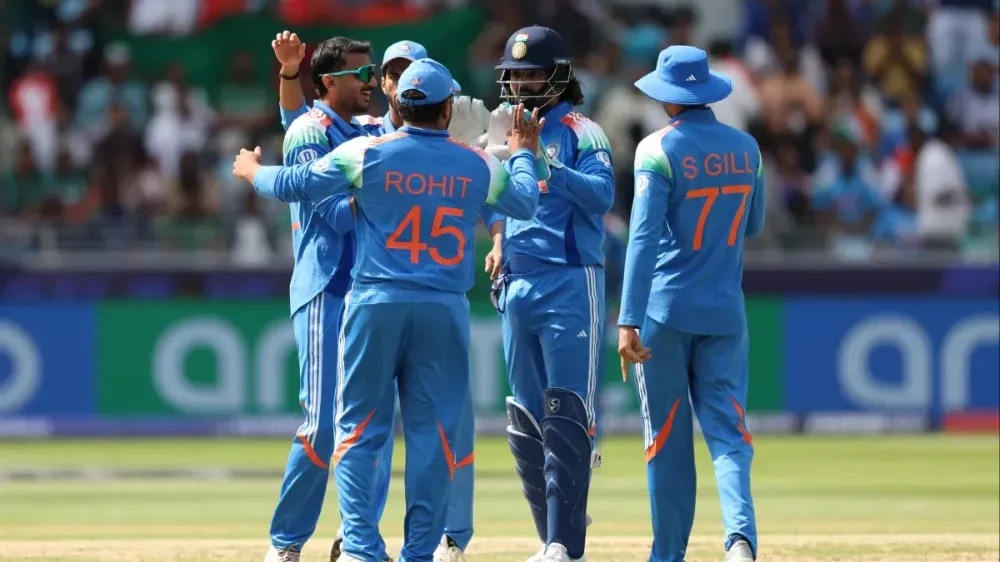
He became the ninth Indian batter to reach 250 ODI matches, and although he did not bat because the hosts were skittled out for just 50 runs, he helped India lift the Asia Cup title as captain in a 10-wicket win.
If there is any truth to the retirement rumors, he will play his last ODI match against England at Lord's, marking a fitting end to an illustrious career that began in Belfast almost 19 years ago.
The innings that reshaped Rohit Sharma's story
Although Rohit produced many brilliant knocks over the years, what made him one of the best was his ability to turn hundreds into historic innings.
He registered his first 150-plus score against South Africa way back on 11th October, 2015, when he scored 150 runs off 133 balls. But his efforts went in vain as they lost the match by just five runs.
He has scored more than 150 runs eight times in this format, the most by any batter in its history.
He smashed his first double century against Australia in Bengaluru on 2nd November, 2013, scoring 209 runs.
A year later, he scripted history with 264 runs against Sri Lanka at Eden Gardens in Kolkata on 13th November, 2014.
This remains the highest individual score in this format. He hit his third double century against the same opponent in Mohali on 13 December, 2017, when he scored 208 runs.
No other batter in cricket history has smashed three double hundreds in this format, and this shows how Rohit was able to produce such huge knocks in ODIs.