THE TUG OF WAR BETWEEN CORRUPTION AND DEMOCRACY.

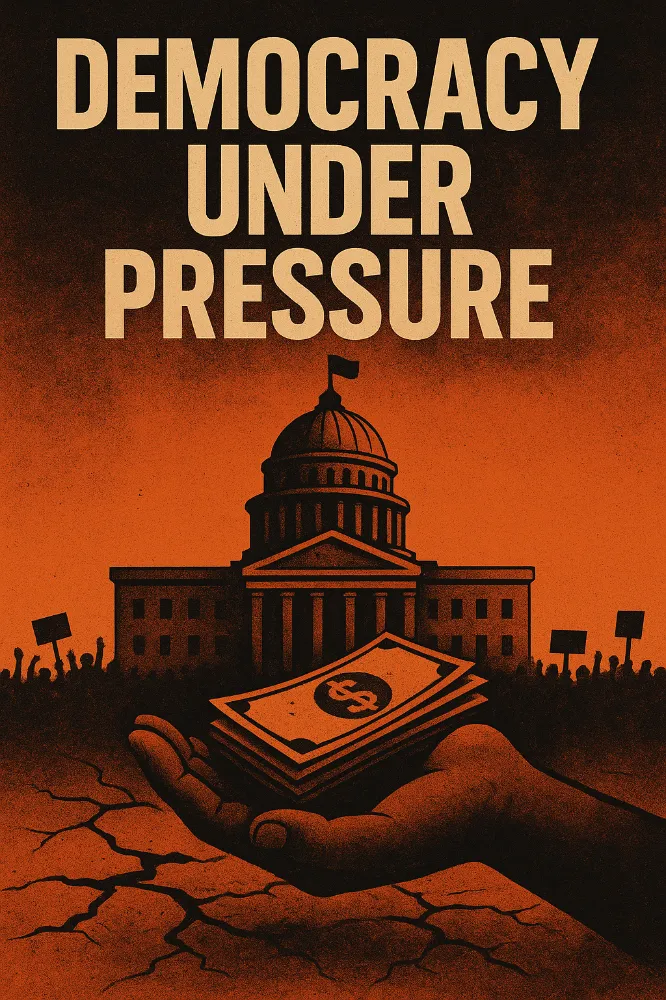
Democracy Under Pressure: How Corruption Fuels Modern Instability
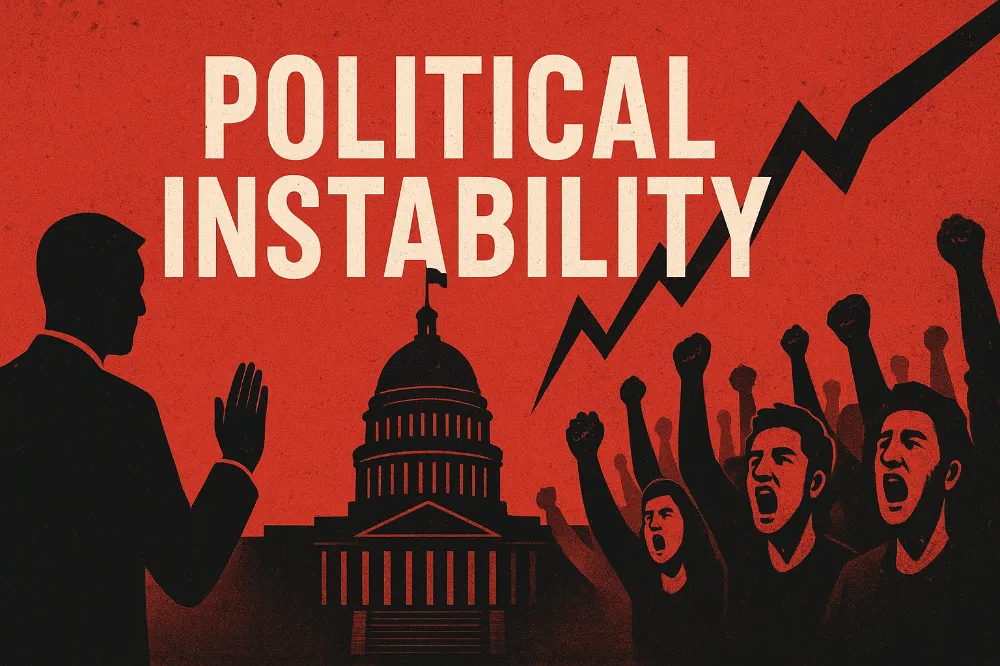
During this period, we remain in an unstable position and are unable to overcome corruption. This is largely due to the lack of proper guidance and sufficient knowledge among those in power to effectively govern the nation.
Corruption doesn’t just steal money — it robs nations of trust, stability, and the very principles that make democracy work. Here’s how it fuels modern instability.
Countries such as India have experienced both progress and setbacks in addressing these challenges, underscoring the delicate balance that democracy must maintain to function effectively.
Heading some key points will be explained :-
- Democracy thrives when leaders are accountable, and citizens are vigilant.
- Corruption and instability can derail even the strongest democratic frameworks if left unchecked.
- Online platforms, RTI (Right to Information), and digital audits help reduce corruption and increase public oversight.
Fund means for public service- education, healthcare, infrastructure na and education. Everything is public property, but the misuse of our property leads to corruption.
Common people usually suffer from corruption.
Some of few real incidents happened in India:-
Coalgate Scandal (2012)
The Coalgate scandal, a major political controversy in India, exposed allegations of corruption in the allocation of coal blocks during the United Progressive Alliance (UPA) government.
In 2012, the Comptroller and Auditor General of India (CAG) released a report accusing the government of inefficiently allocating coal blocks without proper procedures or competitive bidding, leading to a significant loss to the exchequer. The report estimated the loss to be over ₹1.76 trillion (approximately $27 billion at the time).
The scandal involved allegations of corruption against several politicians and businessmen. Some individuals accused of receiving bribes or favors in exchange for coal block allocations included Naveen Jindal, Kumar Mangalam Birla, and certain Congress party leaders.
The scandal had a severe political impact, contributing to the downfall of the UPA government and the Congress party’s defeat in the 2014 general elections. While the scandal has been widely debated and investigated, the full extent of the corruption and the legal consequences for those involved remain a subject of ongoing discussion.
Commonwealth Games (2010)
The Commonwealth Games scandal, a major political controversy in India, exposed allegations of corruption and mismanagement in the planning and execution of the 2010 Commonwealth Games held in Delhi. The Central Vigilance Commission (CVC) found that the organizers of the games had inflated the costs of various projects, resulting in a significant loss to the exchequer. The estimated financial loss due to the scandal was over ₹70 billion (approximately $1.7 billion at the time).
Several government officials and organizers were implicated in the scandal, including Suresh Kalmadi, the chairman of the Organizing Committee, and Lalit , the secretary general. Both individuals were arrested and charged with corruption. The scandal caused significant international embarrassment for India and damaged the country’s reputation as a host of major sporting events. While the scandal has been widely debated and investigated, the full extent of the corruption and the legal consequences for those involved remain a subject of ongoing discussion.
Bofors Scandal (1987)
The Bofors scandal, a major political controversy in India, exposed allegations of corruption in the procurement of artillery guns from the Swedish arms manufacturer Bofors AB.
In 1987, the Swedish Radio reported that Bofors had paid a substantial bribe of approximately $64 million to Indian officials to secure a contract for the supply of 400 field howitzers. The scandal had a devastating impact on Indian politics, leading to the downfall of the Rajiv Gandhi government and the Congress party’s defeat in the 1989 general elections.
Several Indian officials and businessmen were arrested and charged in connection with the scandal, including Win Chadha, an Indian businessman accused of acting as a middleman, and Martin Ericsson, a Bofors executive implicated in the bribery scheme. However, despite extensive investigations, Rajiv Gandhi was never charged or convicted.
The Bofors scandal caused significant political damage, eroded public trust in the government, and had international implications as Sweden and India became embroiled in a diplomatic dispute over the investigation. While the scandal has been a subject of ongoing debate and investigation, the full extent of the corruption and the legal consequences for those involved remain unclear.
Nirav Modi–PNB Scam (2018)
- Amount Involved: ₹13,000 crore.
- Details: Fraudulent LoUs (Letters of Undertaking) issued by PNB to Nirav Modi’s companies.
- Outcome: Modi fled the country; extradition and asset seizures are ongoing
- This happened in Nirav a
How to Fight Corruption: Actionable Solutions
1. Strengthen Anti-Corruption Institutions
- Ensure independence of Lokpal, CVC, and CBI.
- Adequate staffing and funding must be provided.
2. Electoral Reforms
- Cap election spending.
- Make political donations transparent through public records.
3. Judicial Reforms
- Set up fast-track courts for corruption cases.
- Impose strict penalties and asset confiscation.
4. Encourage Whistleblowing
- Implement a robust witness protection system.
- Incentivize internal disclosures in public and private sectors.
5. Public Participation
- Use RTI regularly.
- Form community vigilance groups.
- Support NGOs working for transparency and good governance.
Corruption in India — Tabular Overview
Category
Description
Common Examples
Impact on Society
Petty Corruption
Small-scale corruption in everyday public services
Bribes for certificates, approvals, police verification
Delays, harassment, loss of trust
Bureaucratic Corruption
Misuse of power by officials in gov. departments
Favouritism, altering records, approvals for personal gain
Inefficiency, unfair decisions
Political Corruption
Abuse of power by political actors
Misuse of campaign funds, opaque party financing
Weak governance, erosion of democracy
Judicial Corruption
Corruption in legal processes
Delayed cases, influence in rulings
Reduced faith in justice system
Corporate Corruption
Unethical business practices
Tax evasion, illegal lobbying, unfair tenders
Market unfairness, economic loss
Infrastructure & Contract Corruption
Manipulation in public projects
Inflated budgets, poor-quality construction
Wastage of public money, unsafe structures
Education Sector Corruption
Unfair practices in education
Donation-based admissions, exam cheating mafias
Reduced quality of education
Health Sector Corruption
Corruption in healthcare delivery
Overbilling, counterfeit medicines
Risk to life, higher costs
Law Enforcement Corruption
Misuse of power by authorities
Bribes, selective enforcement
Loss of public confidence
Environmental Corruption
Illegal approvals for environmental violations
Illegal mining, forest clearance without norms
Environmental damage, displacement
The struggle between democracy and corruption is ongoing, but the balance shifts whenever citizens choose integrity over silence. A strong democracy is not built by systems alone, but by people who refuse to let corruption win.
Formal Academic Conclusion
The tug of war between democracy and corruption reveals a fragile yet resilient system. While corruption weakens institutions, transparency, accountability, and civic participation can restore balance. Ultimately, the future of democracy depends on collective responsibility, ethical leadership, and an informed citizenry committed to safeguarding democratic values.
Poetic Conclusion
In this constant pull between democracy and corruption, the rope tightens, but hope holds firm. Every honest act becomes a counter-pull, reminding us that democracy survives not by chance, but by the courage of its people.
Simple & Clear Conclusion
Corruption may challenge democracy, but it cannot defeat it if citizens stay aware, responsible, and united. The strength of democracy lies in how actively people protect it.
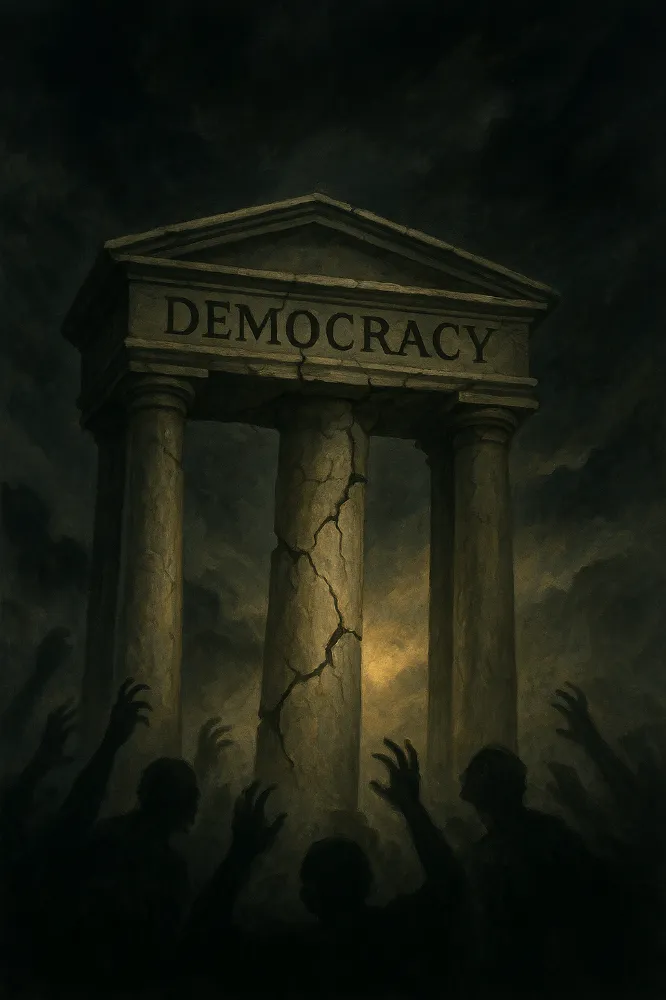
Let the cracks remind us not of failure, but of the work still to be done.