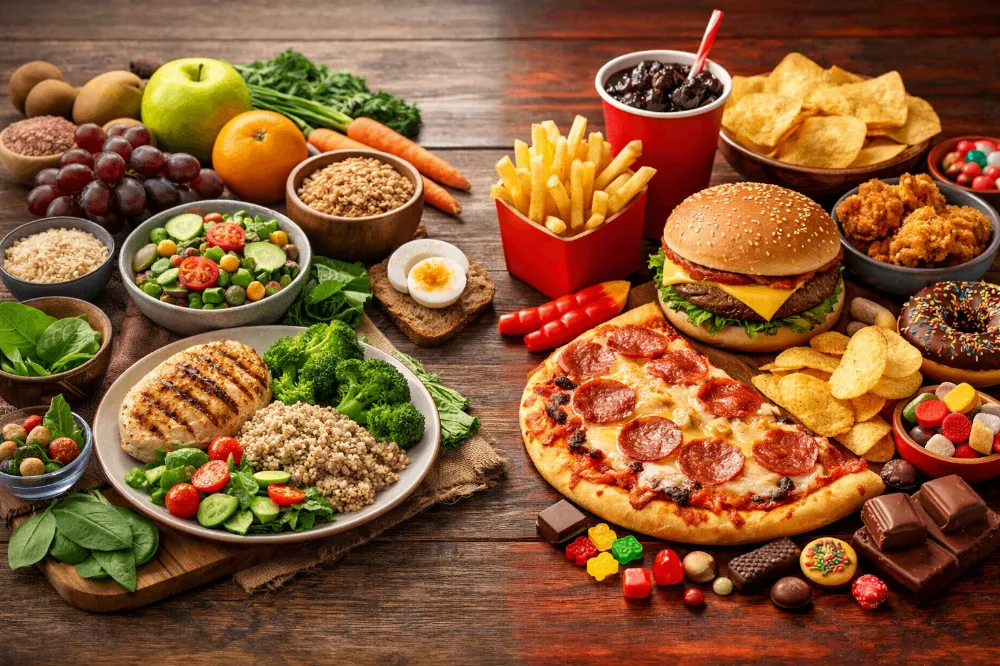
Healthy or Junk? The Daily Food Decision We Often Ignore

Healthy Food vs Junk Food: A Choice We Make More Often Than We Think
Most people don’t plan their day around eating junk food. At least, not intentionally. We usually start with good ideas in mind. A proper breakfast. Something light. Maybe even a home-cooked meal later in the day. But life rarely follows the plan we make in the morning.
Work gets busy. Time runs out. Hunger hits suddenly. And when that happens, junk food becomes the easiest answer. It’s quick, familiar, and doesn’t ask for effort. This is how the habit starts—not because people don’t care about health, but because convenience often wins.
The difference between healthy food and junk food is something almost everyone understands. Still, knowing and doing are very different things.
What Healthy Food Actually Looks Like
Healthy food doesn’t have to be complicated. It doesn’t need fancy names or special packaging. In fact, it’s usually the food people have been eating for years. Vegetables, fruits, grains, lentils, milk, eggs, nuts, and simple cooked meals fall under this category.
These foods may not always look exciting, but they do something important. They help the body work properly. Digestion improves. Energy stays more stable. The body doesn’t feel confused or overloaded.
Healthy food doesn’t give instant pleasure. It gives steady support. And that support adds up over time.
Why Junk Food Feels So Easy
Junk food doesn’t demand planning. You don’t need to cook or wait. You just buy it and eat it. That simplicity makes it tempting, especially on tiring days.
Fast food outlets, packaged snacks, and sugary drinks are everywhere. They are cheap, heavily promoted, and designed to taste good. After a while, they stop feeling like treats and start feeling normal.
That’s where the problem begins. Junk food slowly replaces proper meals without us noticing.
What Junk Food Does to the Body
Junk food fills the stomach but doesn’t truly nourish the body. Most of it is high in salt, sugar, and unhealthy fats, while being low in vitamins and minerals.
At first, the effects feel small. A little tiredness. Some bloating. Occasional acidity. Over time, these small issues turn into bigger ones. Weight gain, digestion problems, low energy, and frequent illness become more common.
The damage doesn’t happen in one day. It happens quietly, which is why many people ignore it until it’s harder to fix.
Energy and Daily Life
One of the clearest differences between healthy food and junk food is energy. When you eat balanced meals, energy levels stay fairly steady. You don’t feel heavy, and you don’t crash suddenly.
Junk food often does the opposite. It gives a quick boost and then drops suddenly. You feel sleepy, restless, or hungry again not long after eating. This affects focus, productivity, and mood throughout the day.
Food choices decide how the rest of the day feels more than we realize.
Mental Effects of What We Eat
Food also affects the mind. A diet with fresh and nutritious food supports better focus and emotional balance. People who eat well regularly often feel calmer and more in control.
Junk food may feel comforting during stress, but that feeling doesn’t last. Too much sugar and processed food can make mood swings worse and concentration harder.
The brain needs proper fuel, not just the stomach.
Children and Eating Habits
Children are strongly affected by food habits. Healthy food supports proper growth, learning, and immunity. When children eat balanced meals, they tend to stay active and alert.
Too much junk food at a young age can lead to poor eating habits, early weight problems, and low energy levels. These habits often continue into adulthood, making them harder to change later.
What children eat regularly becomes their normal.
Is Junk Food Completely Wrong?
Junk food is not evil. Eating it once in a while is normal. The problem starts when it becomes a daily habit instead of an occasional choice.
Enjoying fast food occasionally doesn’t destroy health. Relying on it regularly does. Balance matters more than strict rules.
Making Better Choices Slowly
Healthy eating doesn’t require sudden changes. Small steps work better. Cooking at home more often, carrying simple snacks, drinking more water, and cutting down sugary drinks can make a big difference.
Taste changes over time. Foods that once felt boring start feeling normal. The body adjusts, and cravings reduce naturally.
Consistency matters more than perfection.
Looking at the Long Term
Food choices don’t show results immediately. The real impact appears years later. People who eat balanced food regularly often age better and stay active longer.
Unhealthy habits, when ignored, slowly catch up. Fixing them later usually takes more effort.
Final Thoughts
The choice between healthy food and junk food happens every day. It’s not about being strict or perfect. It’s about awareness.
Junk food offers convenience. Healthy food offers long-term support. Choosing better food more often is a quiet investment in your future.
And that choice, repeated over time, makes all the difference.