Pollution in India

Pollution in India
Pollution is one of the most serious environmental problems facing India today. Rapid industrialization, urbanization, population growth, and unsustainable use of natural resources have led to alarming levels of pollution across the country. Air, water, soil, and noise pollution are affecting not only the environment but also human health, wildlife, and the overall quality of life. India, being one of the fastest-growing economies in the world, faces the challenge of balancing development with environmental protection.
Types of Pollution in India
1. Air Pollution
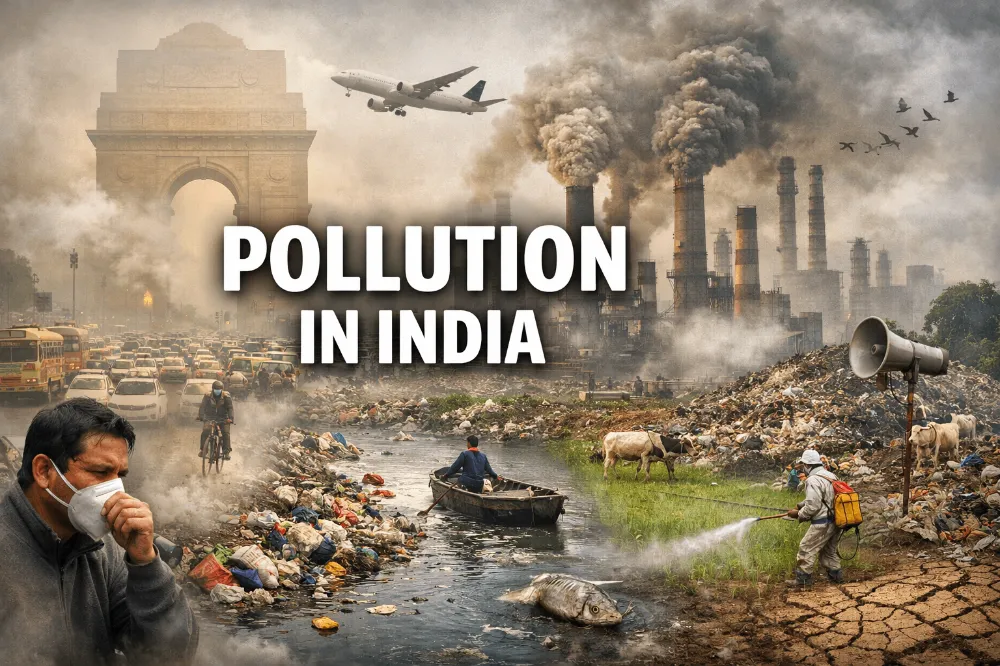
Air pollution is one of the biggest environmental concerns in India. Major cities like Delhi, Mumbai, Kolkata, and Bengaluru often record air quality levels far above safe limits. The main sources of air pollution include:
- Vehicular emissions
- Industrial smoke and chemical emissions
- Burning of fossil fuels such as coal and petroleum
- Crop residue burning in agricultural states
- Construction dust and road dust
Air pollution causes respiratory diseases such as asthma, bronchitis, lung cancer, and heart problems. According to reports, millions of premature deaths occur every year in India due to poor air quality. Children and elderly people are the most vulnerable.
2. Water Pollution
Water pollution is another major issue in India. Rivers, lakes, and groundwater sources are getting polluted due to industrial waste, sewage, and agricultural runoff. Many industries discharge untreated chemicals into nearby water bodies. Urban areas also release large amounts of sewage into rivers without proper treatment.
The Ganga and Yamuna rivers are examples of severely polluted rivers. Polluted water leads to diseases like cholera, diarrhea, dysentery, and hepatitis. It also harms aquatic life and reduces the availability of clean drinking water.
3. Soil Pollution
Soil pollution occurs when harmful chemicals, pesticides, fertilizers, and industrial waste are released into the soil. Excessive use of chemical fertilizers and pesticides in agriculture has degraded soil quality. Dumping of solid waste and industrial waste also contaminates land.
Soil pollution affects agricultural productivity and enters the food chain, posing serious health risks to humans and animals.
4. Noise Pollution
Noise pollution is common in urban areas due to traffic, loudspeakers, construction activities, and industrial machines. Continuous exposure to high noise levels can cause hearing loss, stress, high blood pressure, and sleep disturbances.
Causes of Pollution in India
1. Rapid Population Growth
India has a large and rapidly growing population. More people means more vehicles, more industries, more waste, and more consumption of resources. This increases pollution levels significantly.
2. Industrialization
Industries are essential for economic development, but many industries in India still use outdated technology and do not follow environmental standards. Industrial emissions and effluents are major contributors to air and water pollution.
3. Urbanization
Migration from rural areas to cities has led to overcrowded cities. Poor waste management, traffic congestion, and lack of green spaces contribute to pollution in urban areas.
4. Agricultural Practices
The use of chemical fertilizers, pesticides, and herbicides has increased agricultural productivity but has also caused soil and water pollution. Burning crop residues releases harmful smoke into the air.
5. Poor Waste Management
India generates huge amounts of solid waste every day. Lack of proper waste segregation, recycling, and disposal leads to garbage accumulation, landfills, and burning of waste, which pollutes air and soil.
Effects of Pollution
1. Health Impacts
Pollution has severe effects on human health. Air pollution causes respiratory and cardiovascular diseases. Water pollution causes infectious diseases. Soil pollution affects food safety. Noise pollution affects mental and physical health.
2. Environmental Damage
Pollution harms ecosystems, forests, wildlife, and aquatic life. Acid rain, climate change, and global warming are also linked to pollution. Many species are endangered due to habitat destruction and pollution.
3. Economic Loss
Pollution leads to increased healthcare costs, loss of productivity, and damage to agriculture and tourism. The economic burden of pollution is huge for the country.
4. Climate Change
Greenhouse gases released from industries, vehicles, and power plants contribute to global warming and climate change. India is vulnerable to climate-related disasters like floods, droughts, and heat waves.
Government Initiatives to Control Pollution
The Government of India has taken several steps to control pollution:
- The Air (Prevention and Control of Pollution) Act, 1981
- The Water (Prevention and Control of Pollution) Act, 1974
- The Environment Protection Act, 1986
- National Clean Air Programme (NCAP)
- Swachh Bharat Mission for cleanliness and waste management
- Namami Gange Project to clean the Ganga River
- Promotion of renewable energy like solar and wind power
However, strict implementation and public participation are required for these policies to be effective.
Role of Citizens in Reducing Pollution
Every citizen has a role to play in reducing pollution:
- Use public transport, bicycles, or electric vehicles
- Avoid burning garbage and crop residues
- Reduce, reuse, and recycle waste
- Save water and electricity
- Plant trees and protect green spaces
- Avoid using plastic bags and single-use plastics
- Spread awareness about environmental protection
Conclusion
Pollution in India is a serious challenge that threatens human health, the environment, and the future of the nation. While development is necessary, it should not come at the cost of nature. Sustainable development, strict environmental laws, technological innovation, and public awareness are essential to control pollution. If the government, industries, and citizens work together, India can achieve economic growth while maintaining a clean and healthy environment. Protecting the environment today will ensure a better and safer future for coming generations.