Why Is Everyone Drinking Kombucha Right Now? We looked into it...

WHY IS EVERYONE DRINKING KOMBUCHA RIGHT NOW?
A 2,000-year-old fermented drink somehow became the wellness drink of our generation. Here's what's actually going on and whether it's worth the hype.
Let's break it down — the real history, why it blew up, what it actually does to your body, and whether you should be drinking it. It's Been Around Forever. We Just Discovered It.
Kombucha is not a new wellness invention , it genuinely originated in ancient China around 220 BCE, where it was consumed as a medicinal drink. From there it spread to Japan, Russia, and through Eastern Europe. In Russia especially, homemade kombucha was a household staple long before the West ever put it in a bottle with a minimalist label.
So why did it explode globally only in the last decade? Simple: wellness culture, gym culture, and social media made "gut health" a personality trait. And kombucha was perfectly positioned to ride that wave.
Why Did It Actually Blow Up?
The first reason is the gut health obsession, which is very real. Around 2016–2020, probiotics, digestion, and microbiome health became genuinely mainstream topics. People started reading about how the gut is basically a "second brain," and suddenly fermented foods became premium health products overnight. Kombucha got grouped in with kimchi, kefir, yogurt, and probiotic supplements and it was the only one that came in a fizzy, drinkable form you could carry around and feel good about.
The second reason is that it fills the "healthy soda" gap people were looking for. A huge chunk of people are trying to cut down on alcohol and sugary sodas but still want something with carbonation and flavor. Kombucha fills that gap perfectly — it's fizzy, it comes in a hundred flavors, and it's marketed as healthy. That combination is basically a cheat code in the beverage industry.
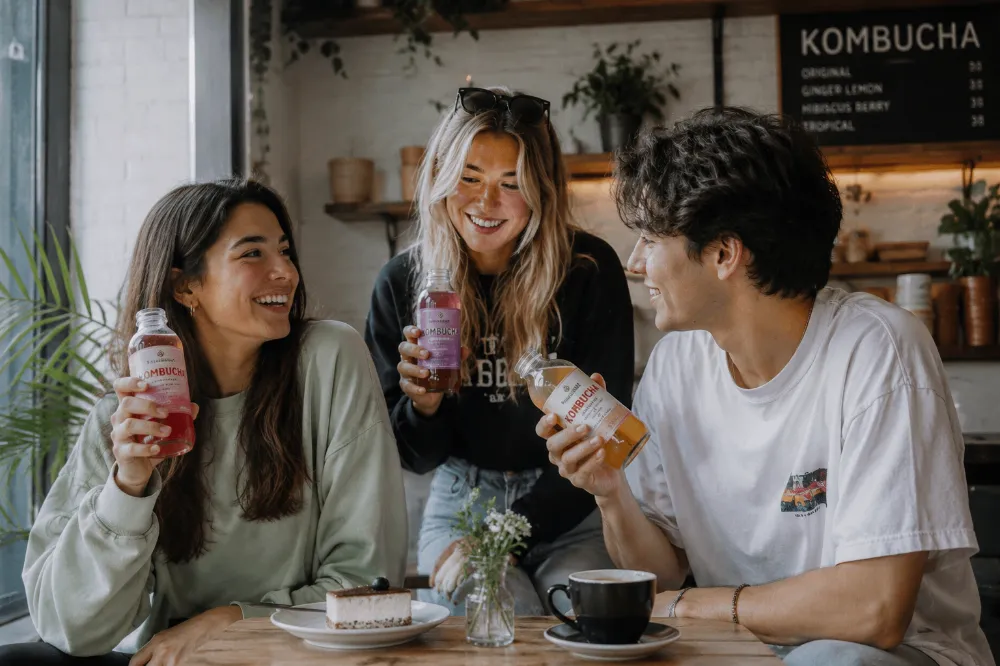
Third, the branding is doing serious heavy lifting. Most kombucha brands are incredibly well-designed — minimalist bottles, pastel packaging, words like "raw," "live culture," "organic," and "craft-brewed." This aesthetic strongly resonates with Gen Z and millennial consumers. It doesn't just taste like a drink; it looks like a lifestyle choice. That matters more than people admit.
Fourth, TikTok and influencer culture pushed it hard. Once "gut reset," "clean girl diet," and "detox" became TikTok content categories, kombucha was basically guaranteed viral real estate. Wellness YouTubers, fitness influencers, and dietitian creators all brought it up — some honestly, some with far more enthusiasm than the science actually supports.
So Is Kombucha Actually Healthy? The Honest Answer.
This is where it's important to be real, because the internet loves to either worship or cancel things without nuance.
On the legitimate benefits side, kombucha does contain probiotics. It's made from fermented tea, so it carries antioxidants. It's generally lower in sugar than soda, and some people genuinely find it helps with digestion — that's a real, valid experience worth acknowledging.
On the overhyped side, the scientific evidence is still fairly limited. It is not a miracle cure and will not magically fix gut problems. A lot of store-bought kombucha also contains quite a bit of sugar, so always check the label before assuming it's the healthier option. There are also a few things to watch out for. Because kombucha is acidic and carbonated, some people experience bloating, acid reflux, or stomach irritation — especially in larger quantities. Homemade versions can carry contamination risks if not fermented correctly.
And here's something genuinely surprising that most people don't know: kombucha naturally develops small amounts of alcohol during fermentation. It usually stays below legal "alcoholic beverage" limits, but it is still present. If you're avoiding alcohol entirely — for religious reasons, pregnancy, medication, or personal choice — that's worth knowing before you reach for one.
Who's Actually Drinking It?
The biggest consumers are Gen Z (ages 18–27) and millennials (ages 28–44), particularly people in gym culture, wellness-focused communities, vegan circles, and urban café culture. Older generations tend to drink it less because they didn't grow up with wellness marketing as a cultural force and often find the sour taste off-putting. Kids generally dislike it too. The fermented, vinegary flavor is genuinely an acquired taste — similar to how most people don't immediately love black coffee or beer. Many regular kombucha drinkers will privately admit they found it unpleasant the first time around.
It's also worth being honest about something: for many people, drinking kombucha is partly about identity and lifestyle image, not just taste. It signals that you care about health, eat clean, and are somewhat in the know on wellness trends. That's a real part of its appeal, and there's nothing wrong with acknowledging it.
Should You Actually Drink It?
If you enjoy the taste and it makes you feel good, then yes — it's a reasonable swap for soda, it has some real if modest health benefits, and the habit of choosing a lower-sugar, intentional drink is genuinely worthwhile. If you're expecting it to transform your gut health and reverse years of poor eating habits, it won't. No single drink will. Think of it as one small piece of a bigger picture, not a shortcut.
And if you've never tried it, be warned: the first sip tends to be polarizing. It's sour, tangy, and a little funky. Give it a few tries before making your final call — most people who love it didn't love it immediately.
The Bottom Line
Kombucha is a 2,000-year-old fermented drink that found its moment in wellness culture. It has real , if modest , benefits, genuinely strong branding, and a cultural identity that resonates deeply with younger consumers. It's not magic, but it's not a scam either. Drink it if you enjoy it.